A Computational Approach Towards Urban Equitable Futures
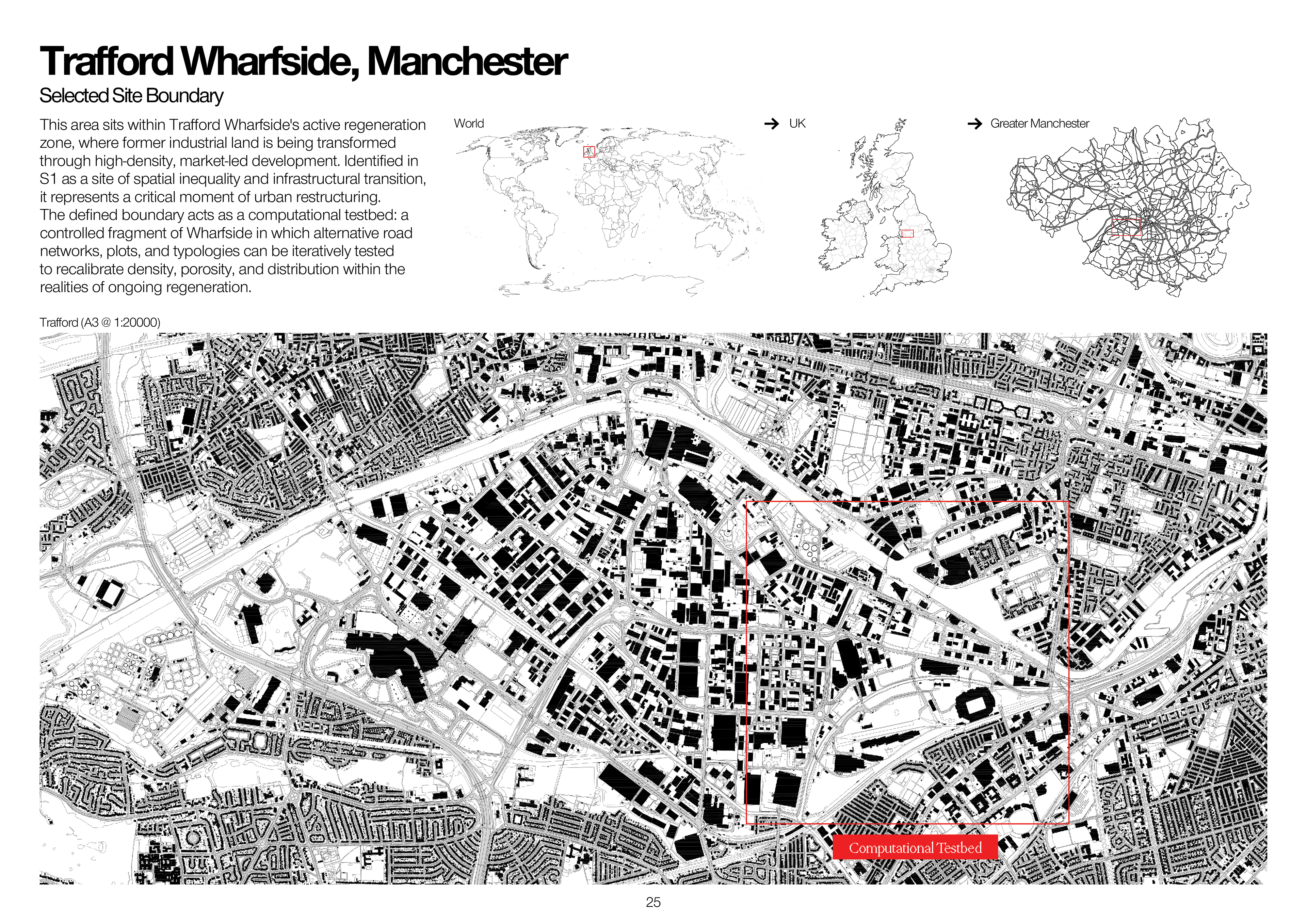
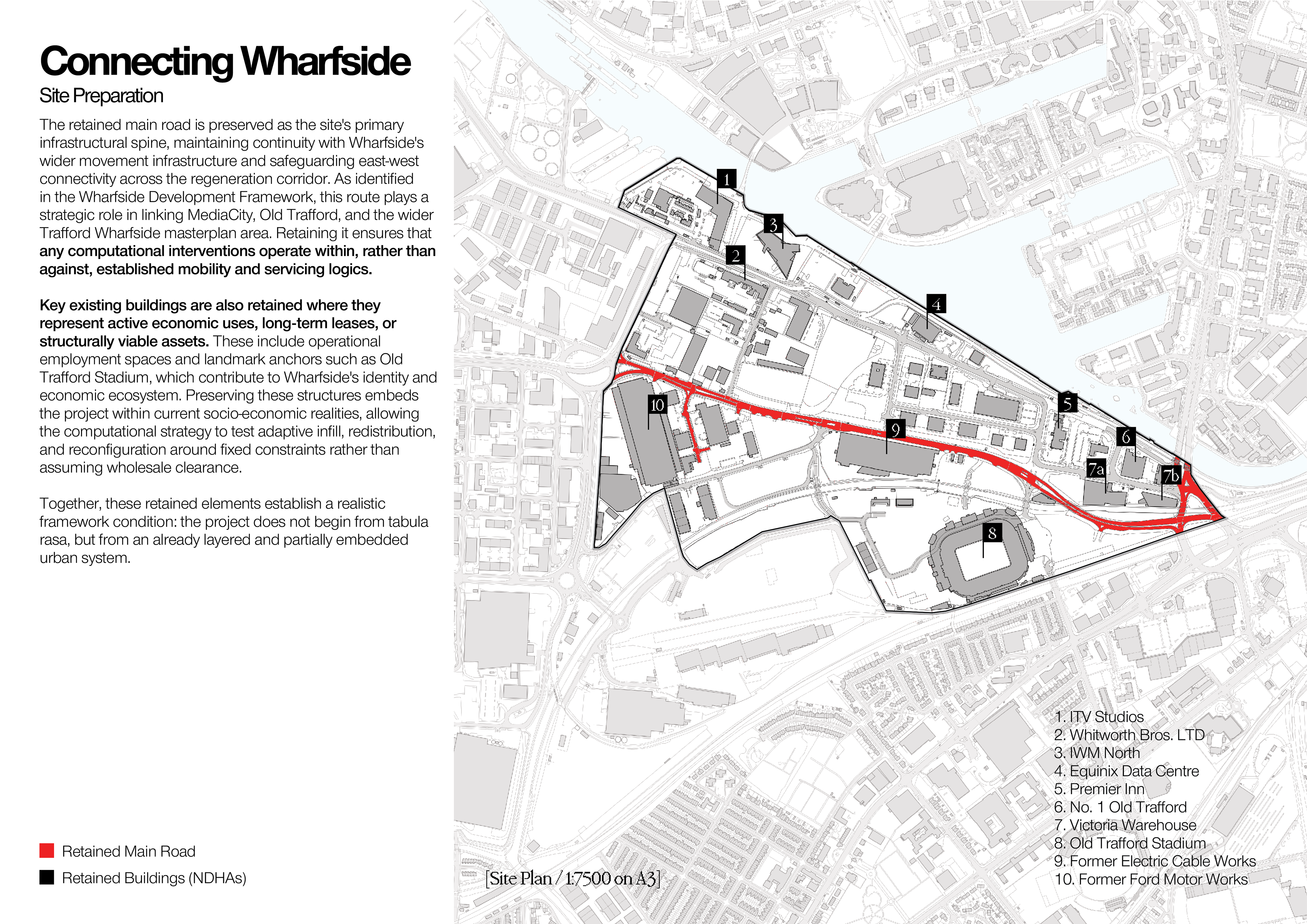
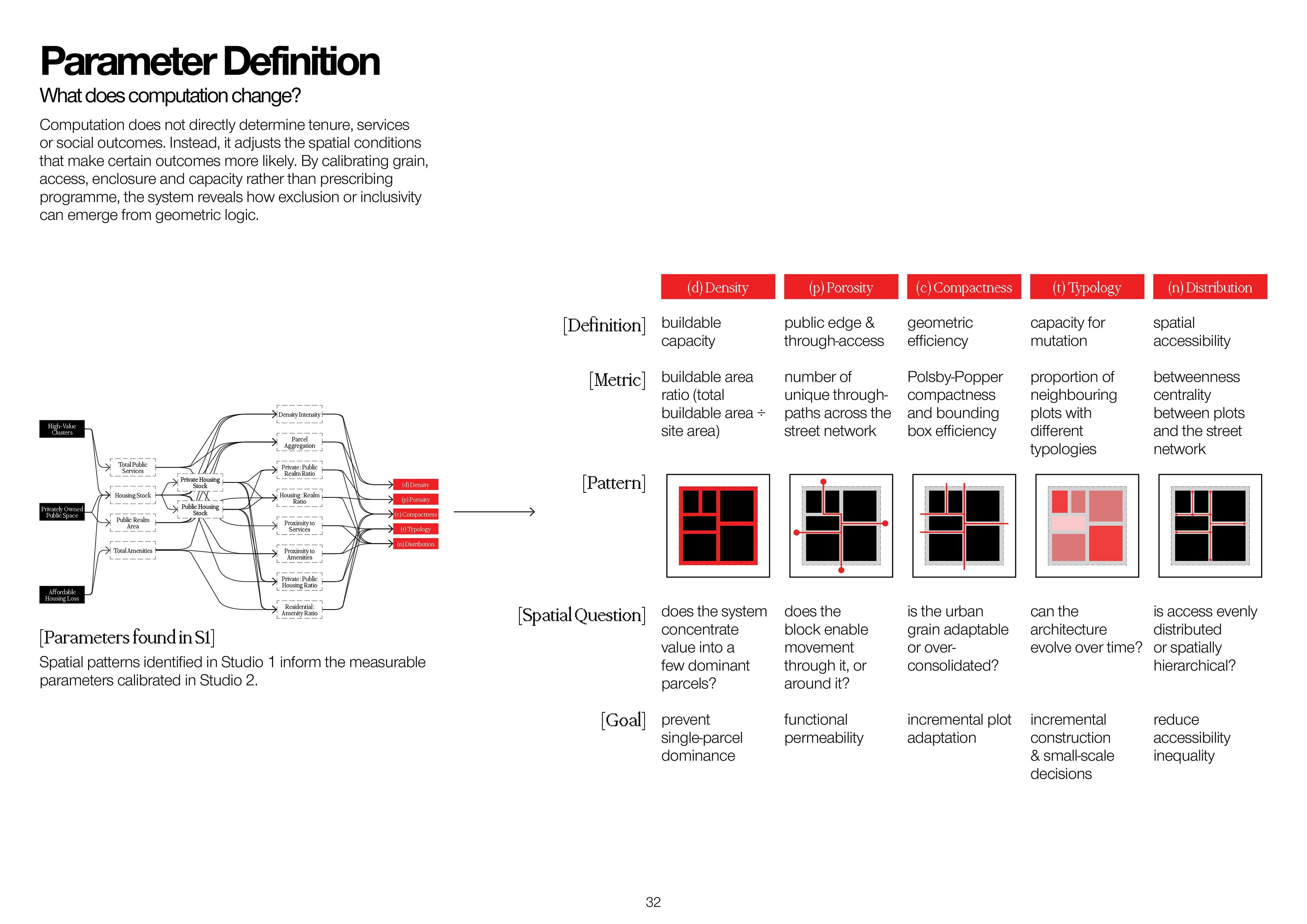
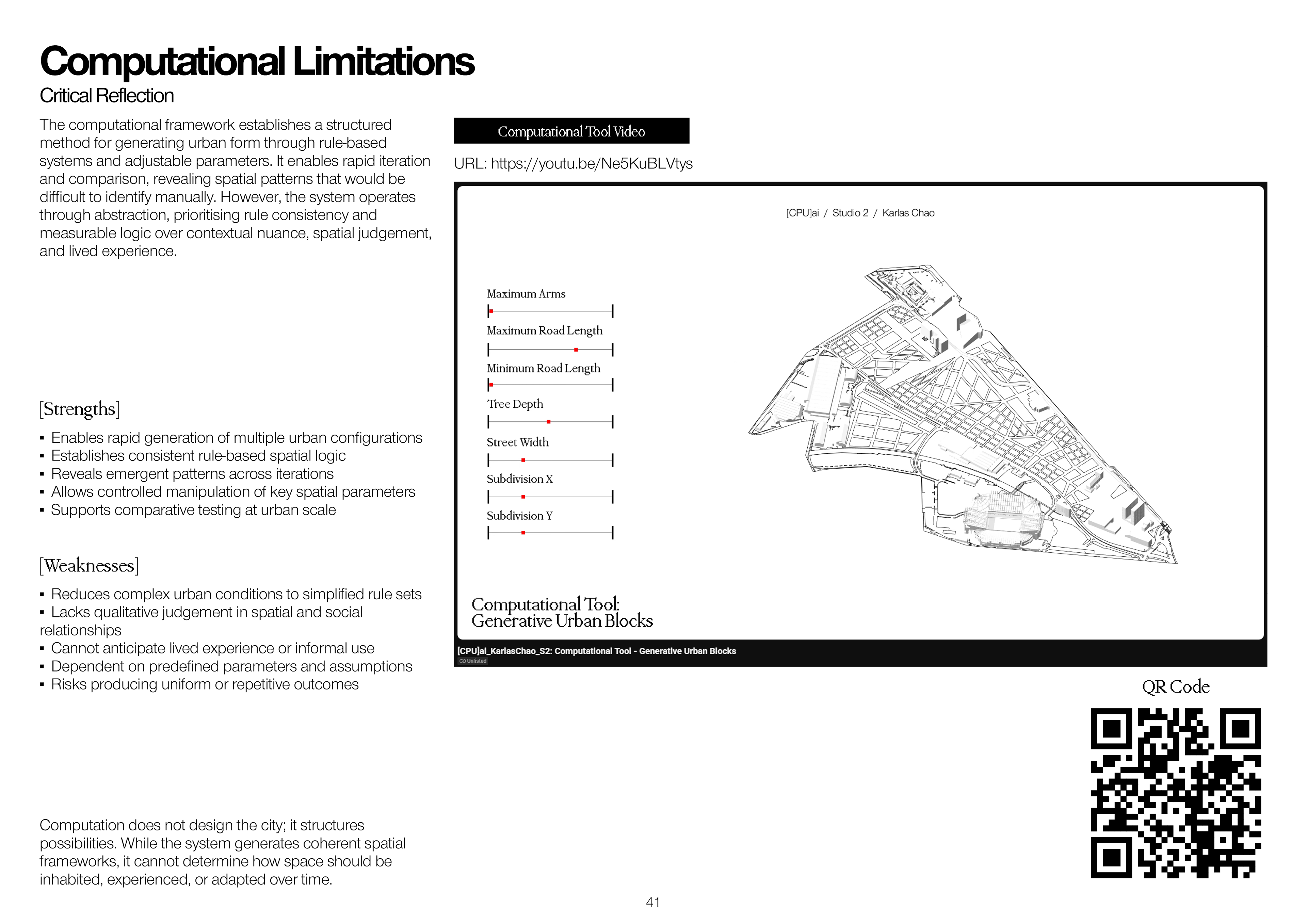
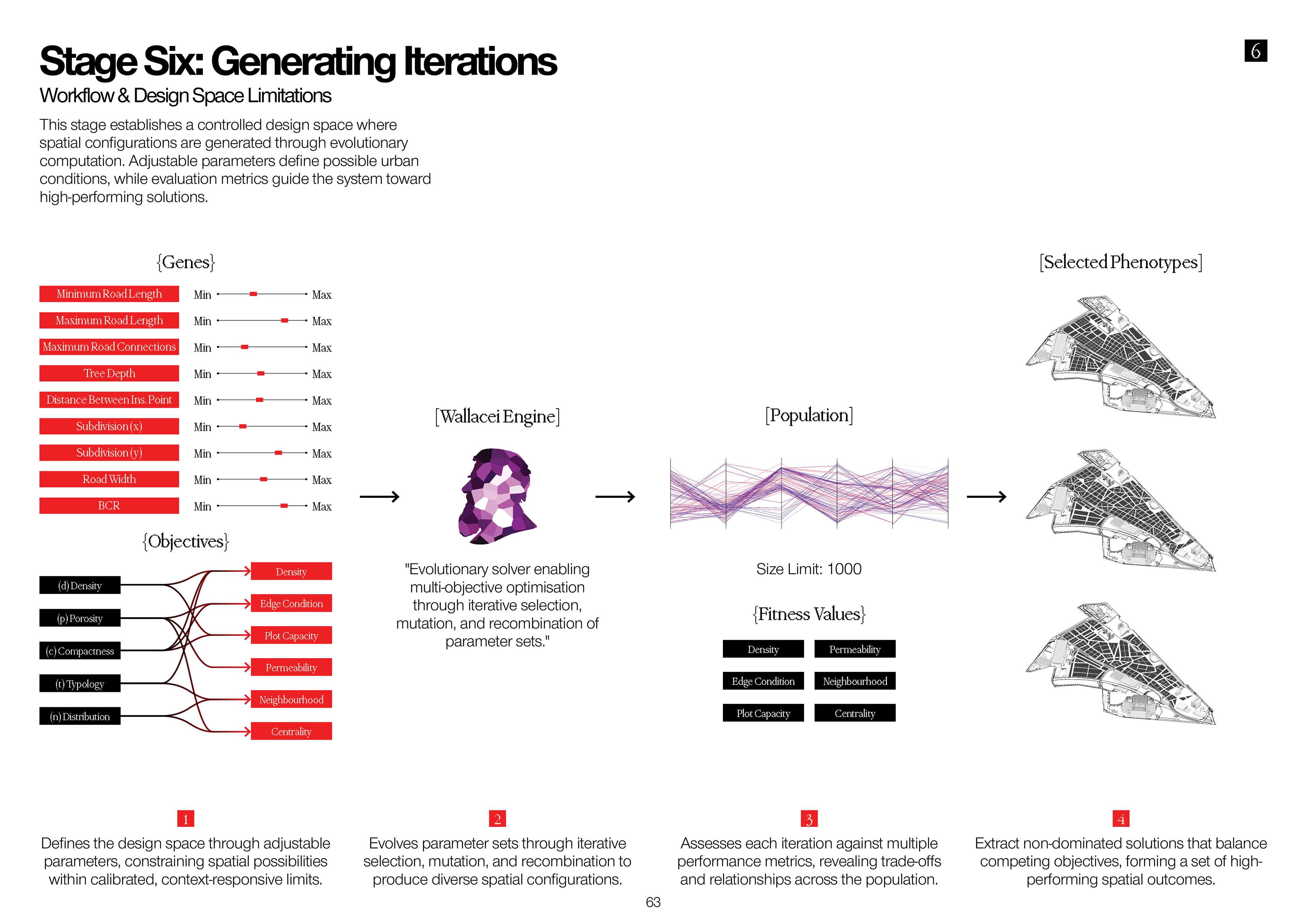
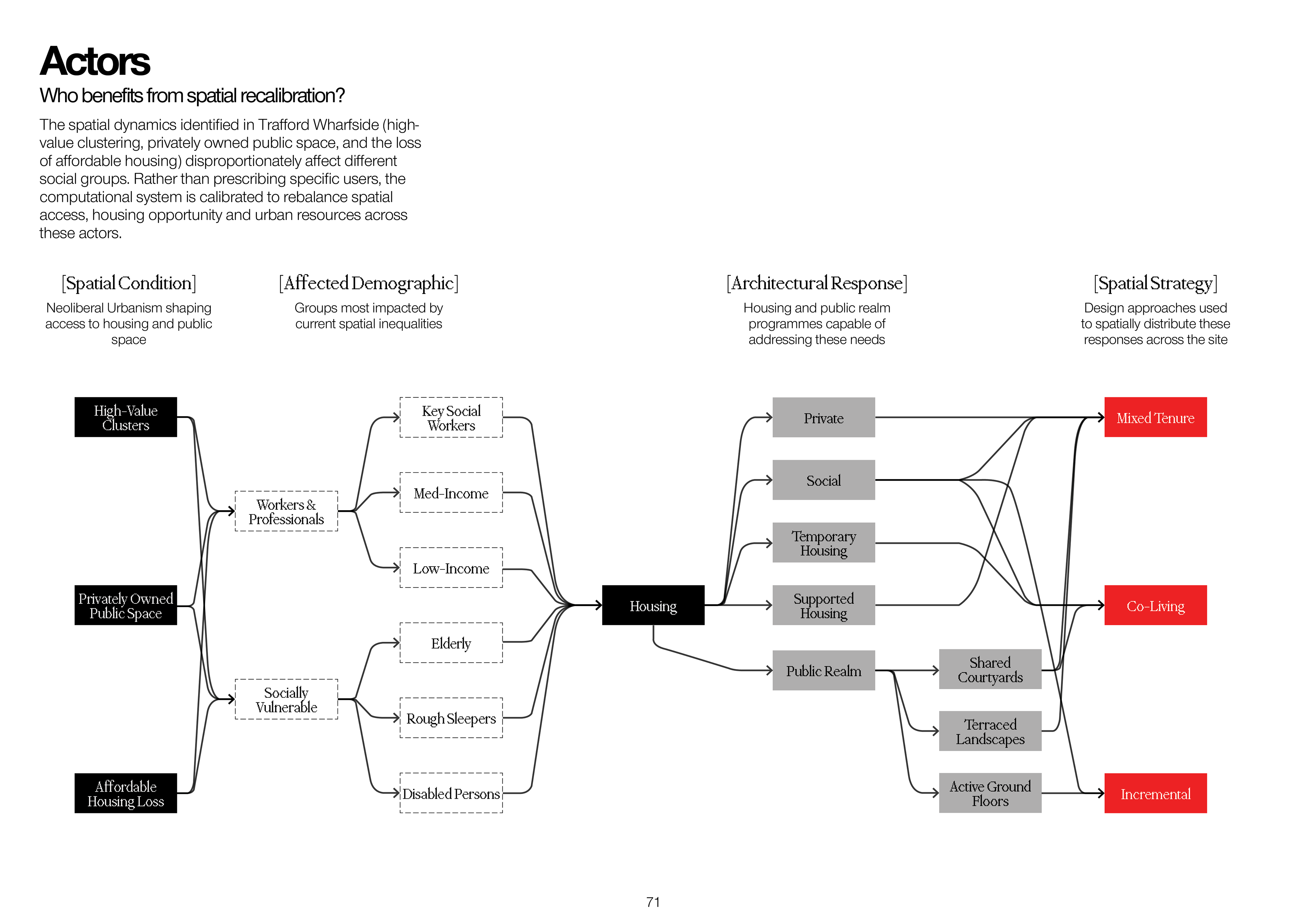
PROMETHEUS develops the critical framework of ICARUS into a working computational urban system. The work shifts from asking what the spatial problem is to testing how it might be systemically rebalanced. Trafford Wharfside is treated as a complex adaptive system, where rules, parameters, and feedback loops generate multiple urban scenarios rather than a single masterplan.
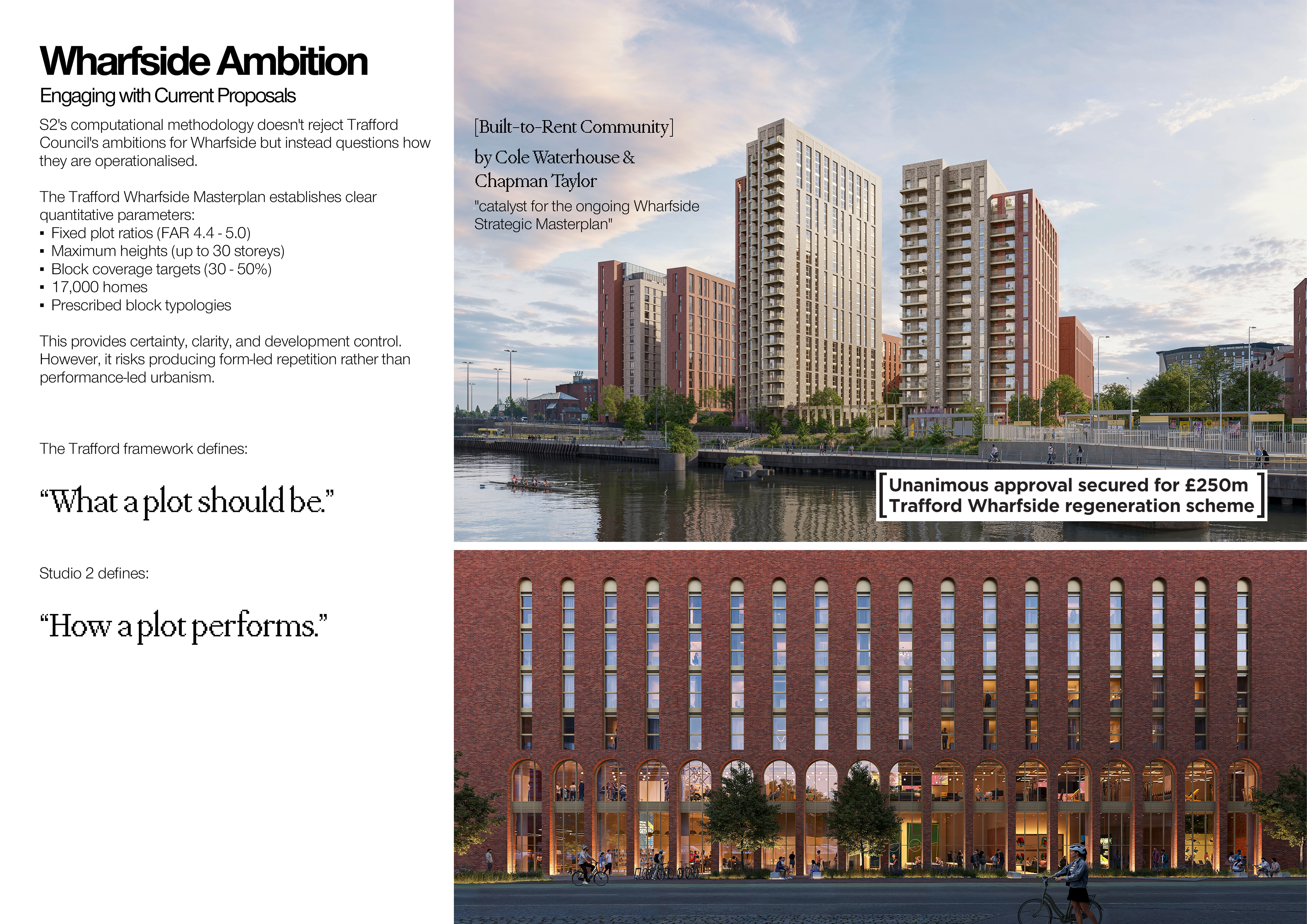
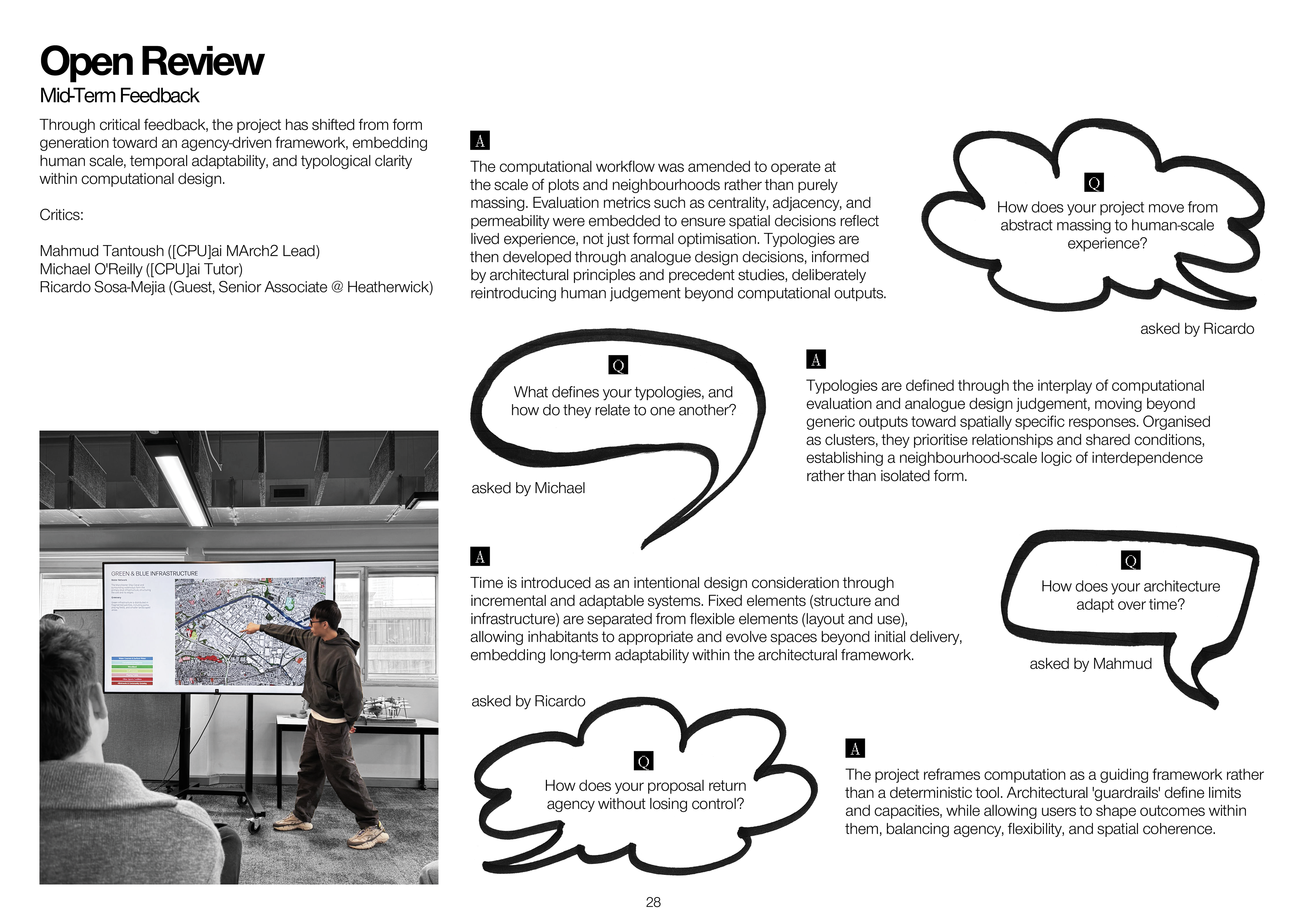
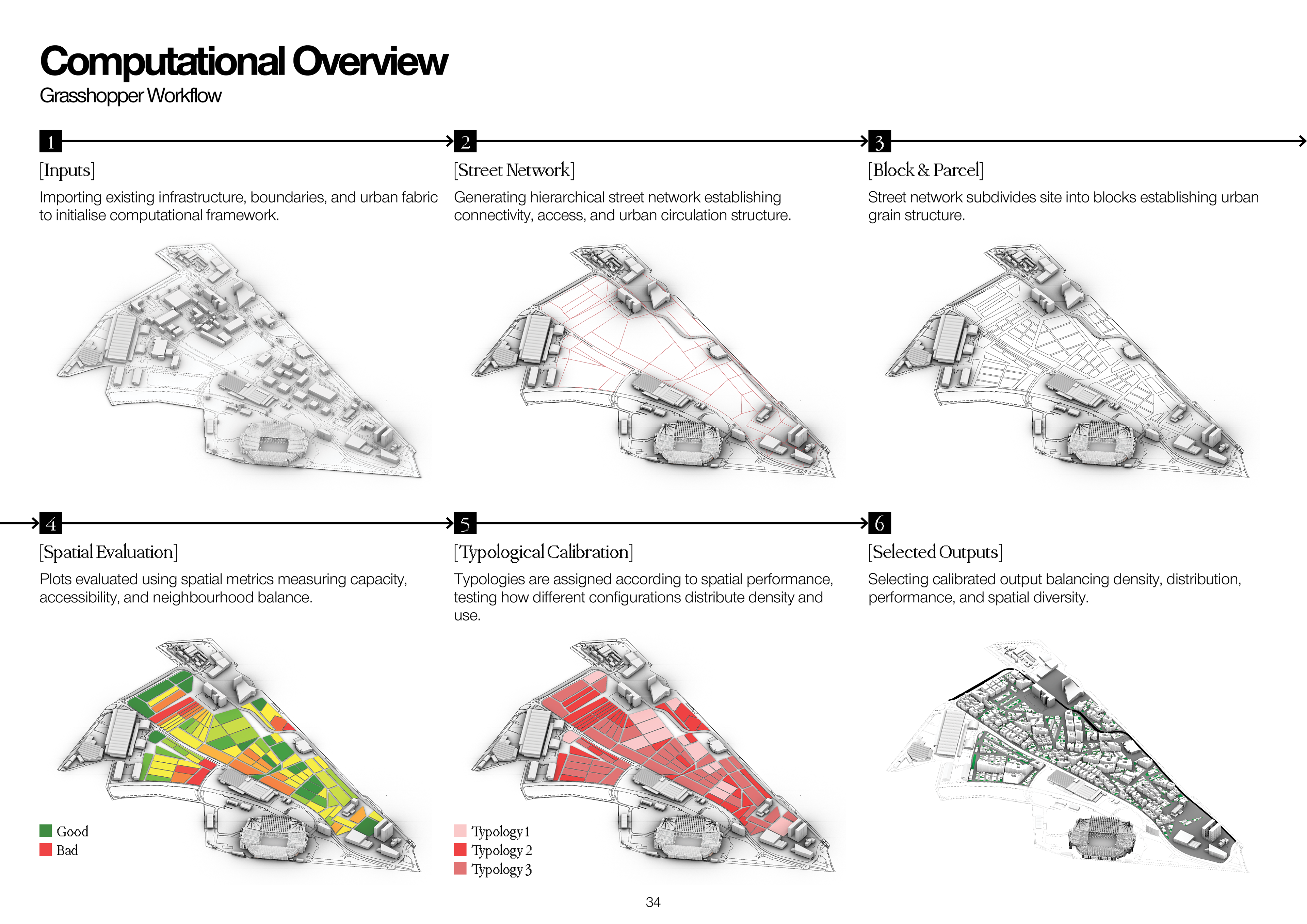
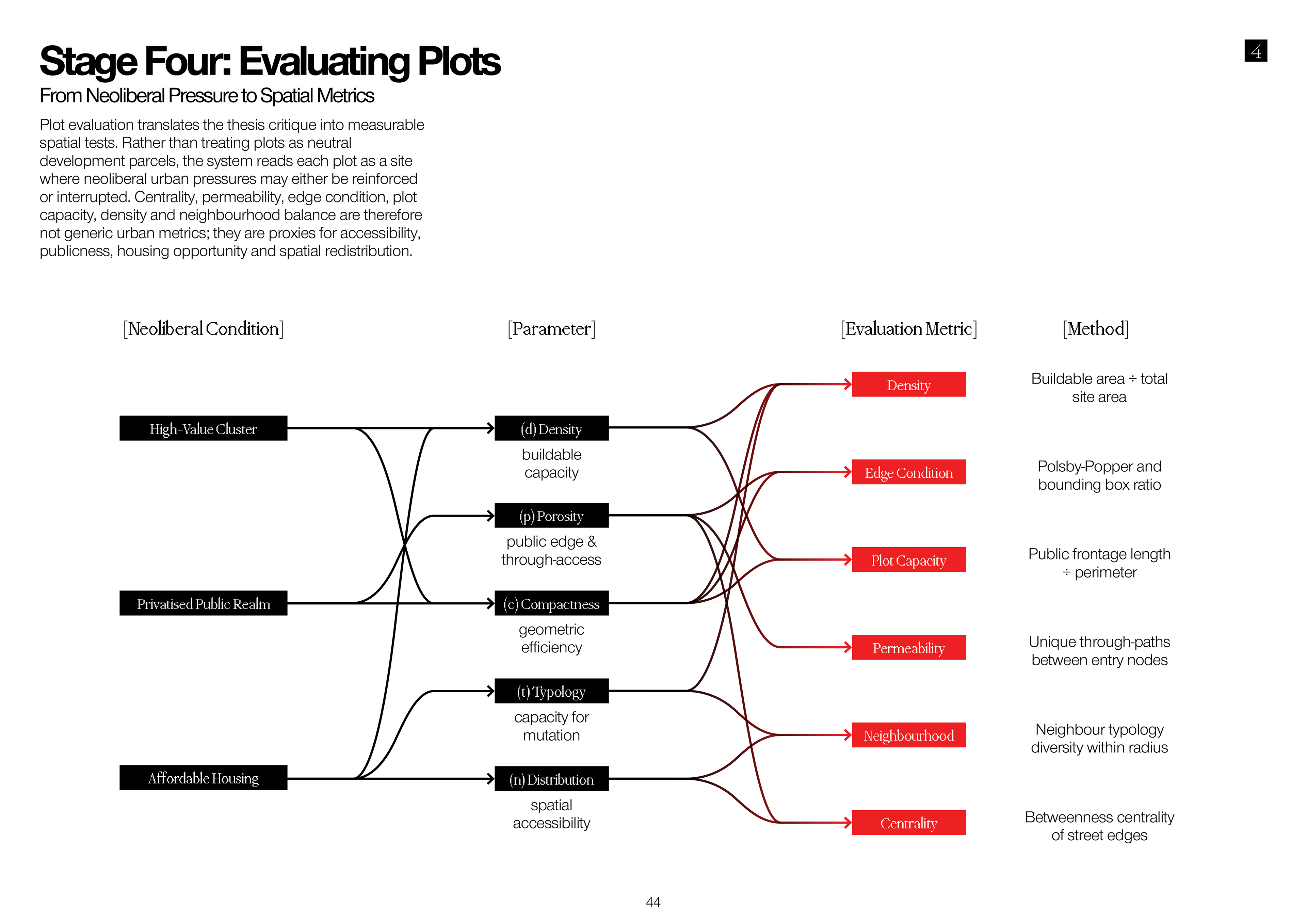
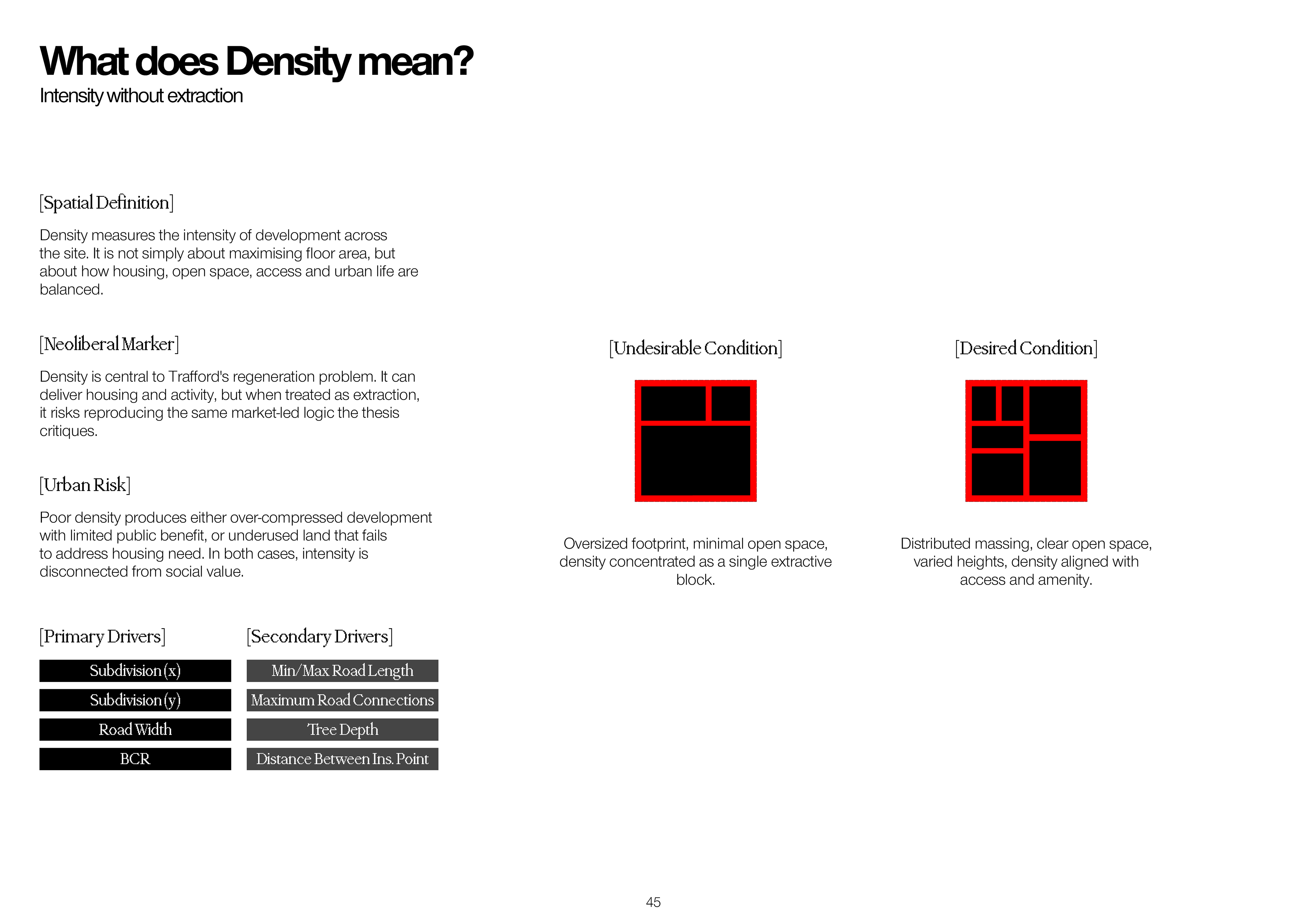
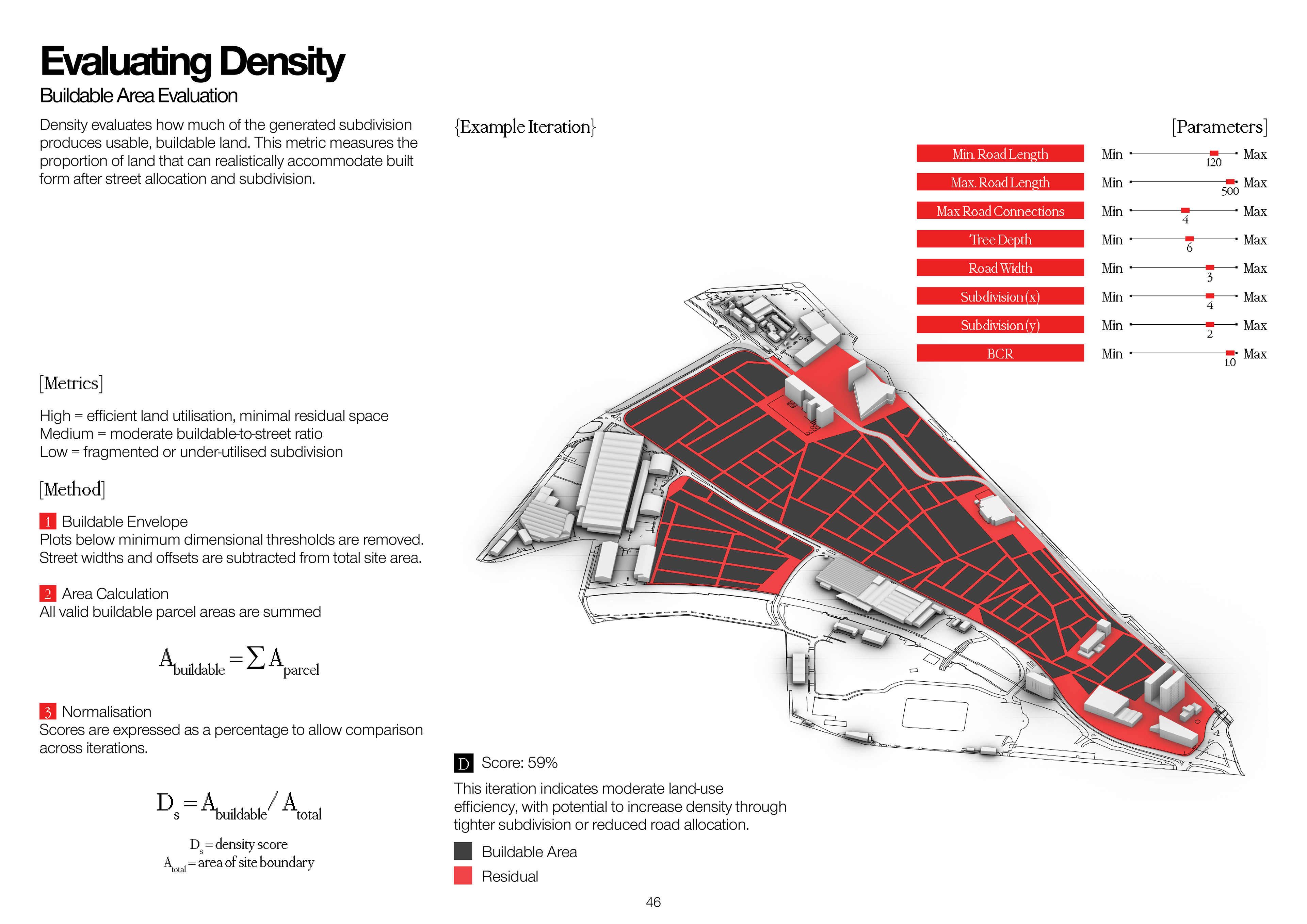
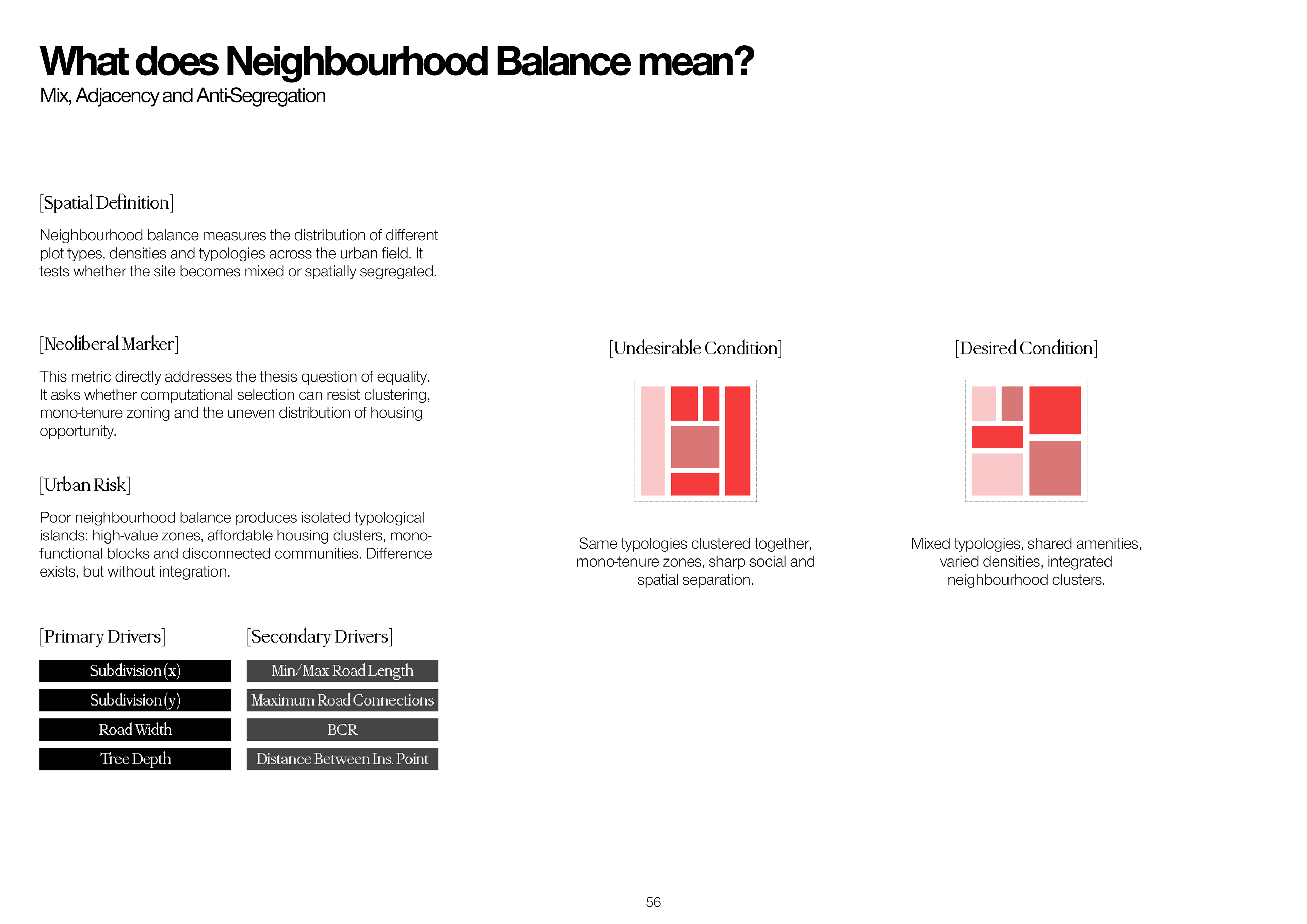
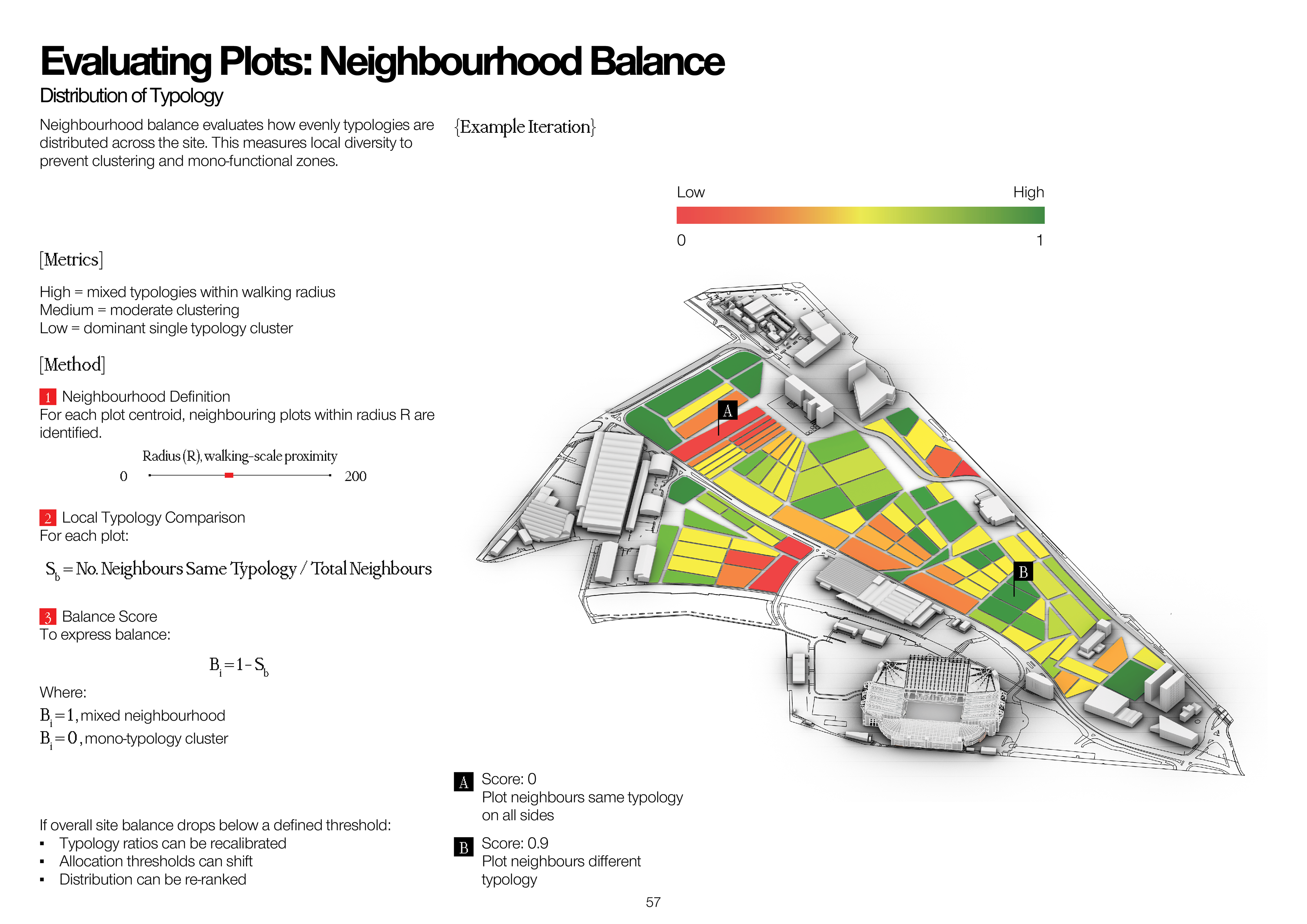
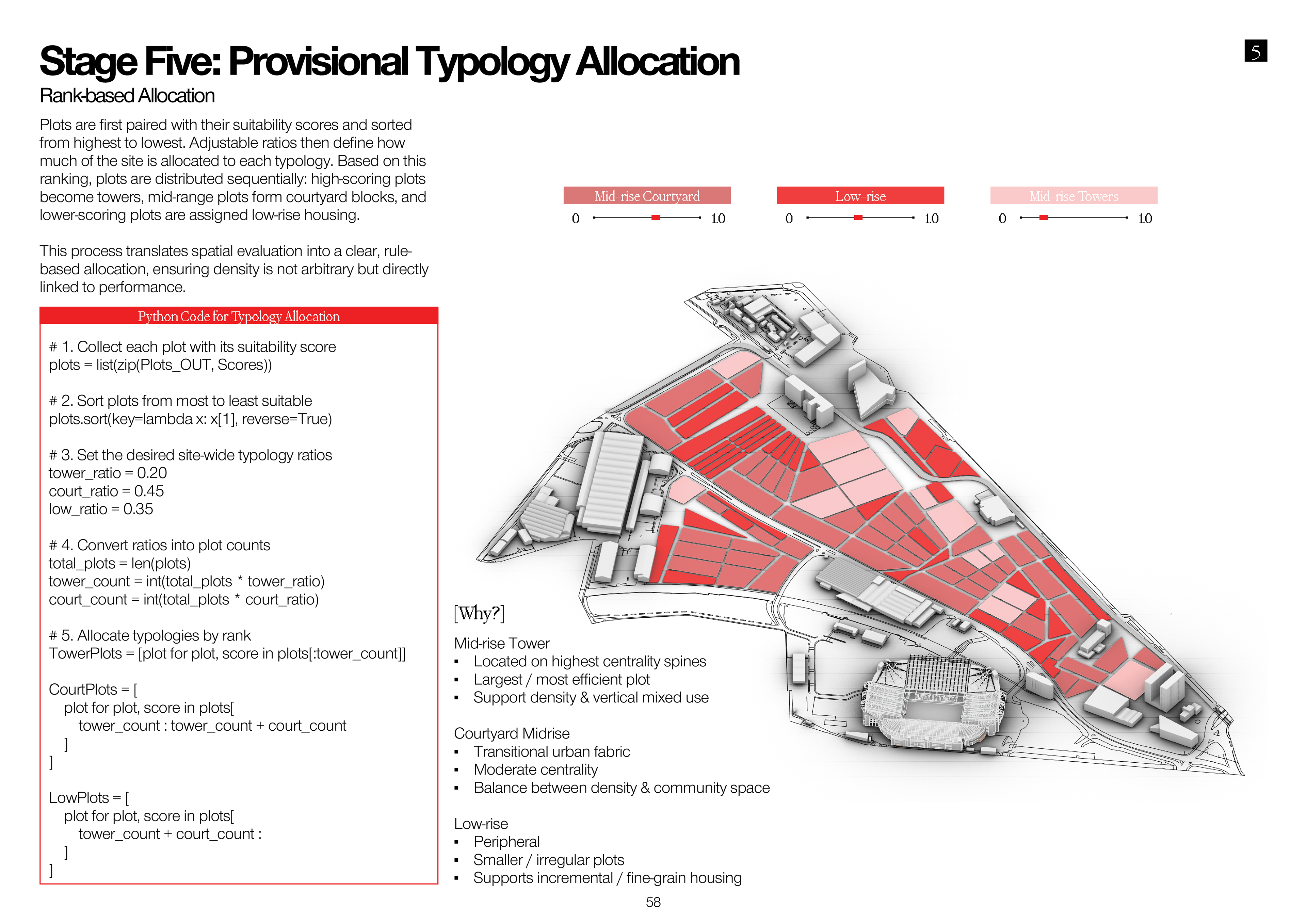
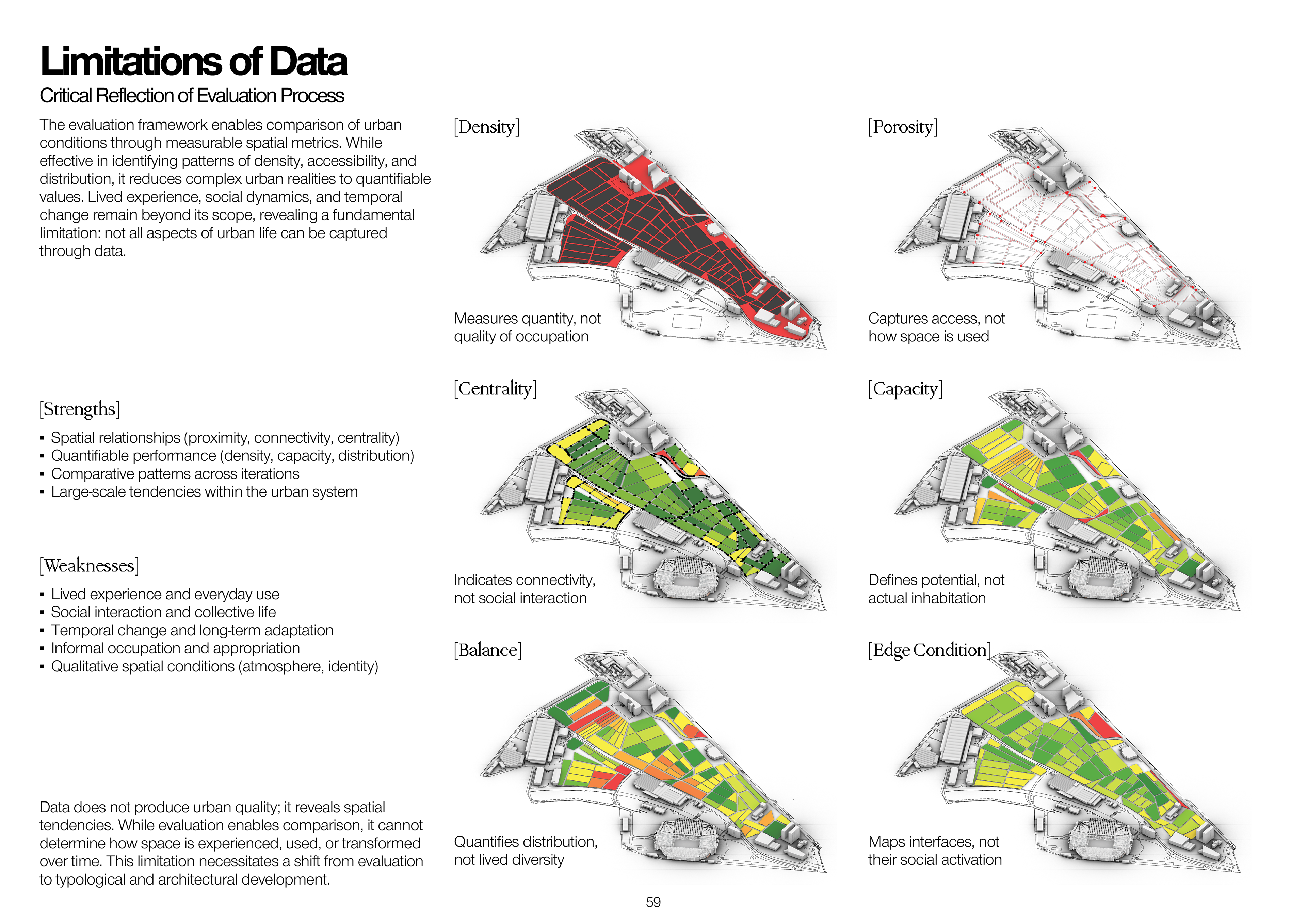
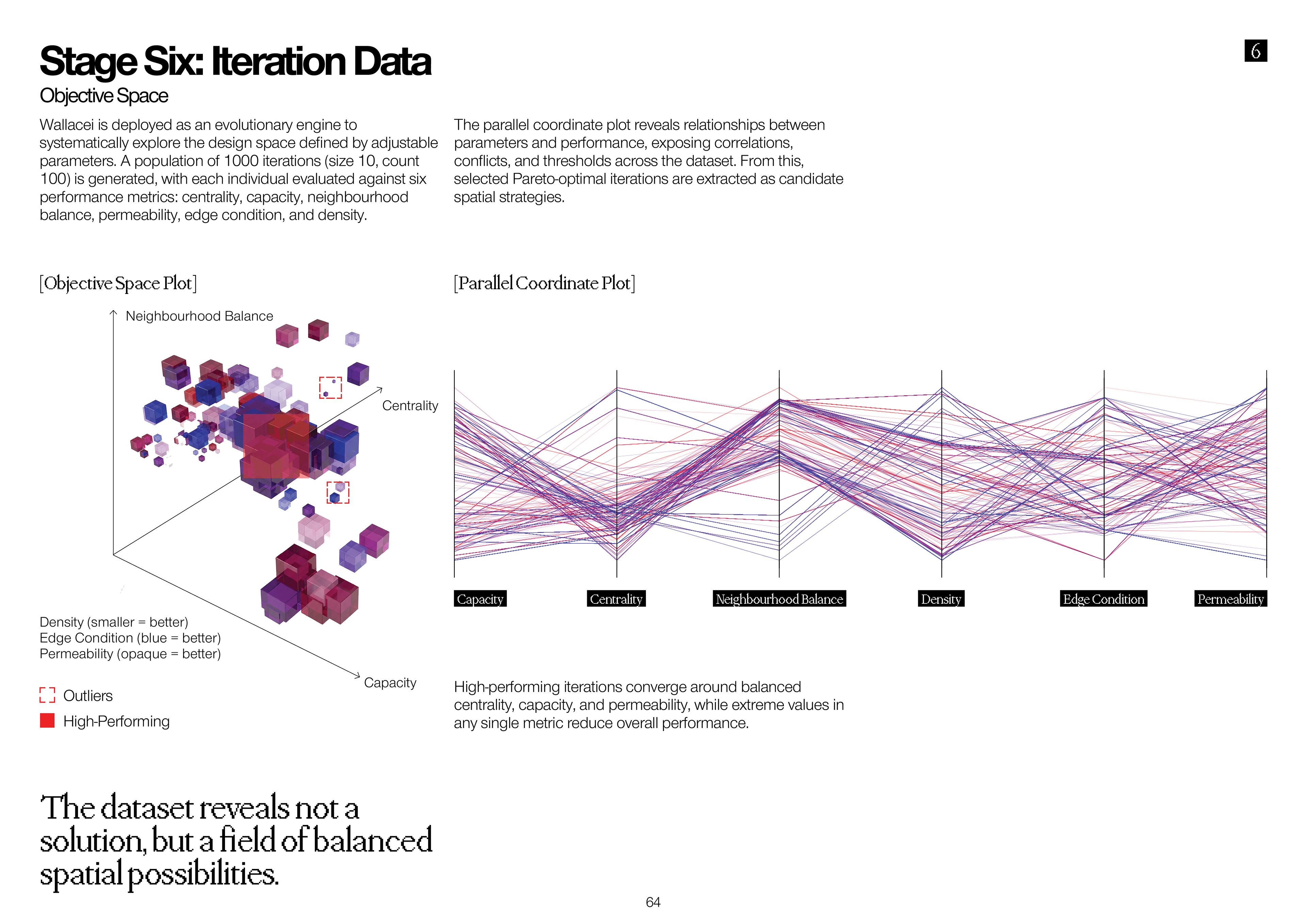
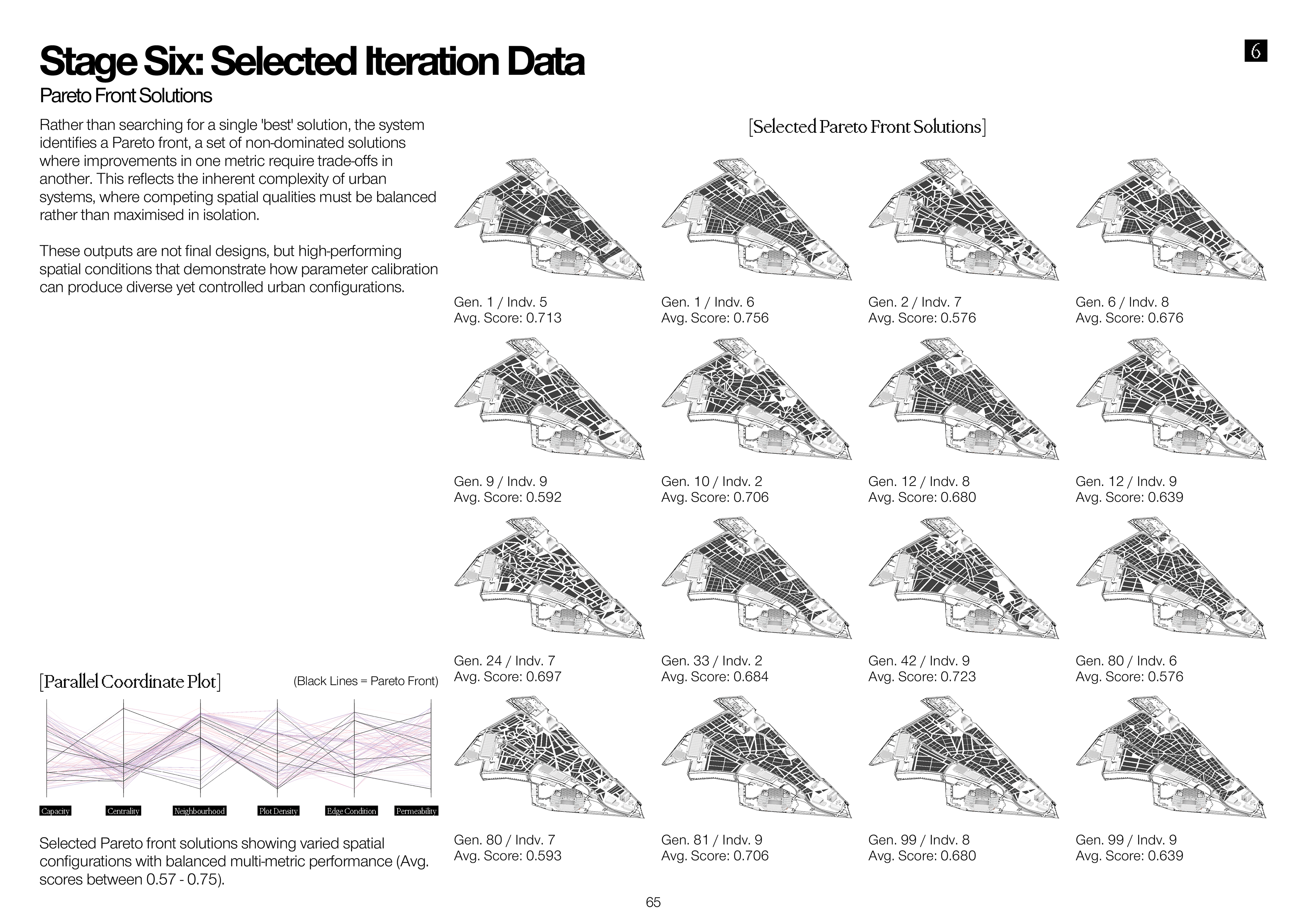
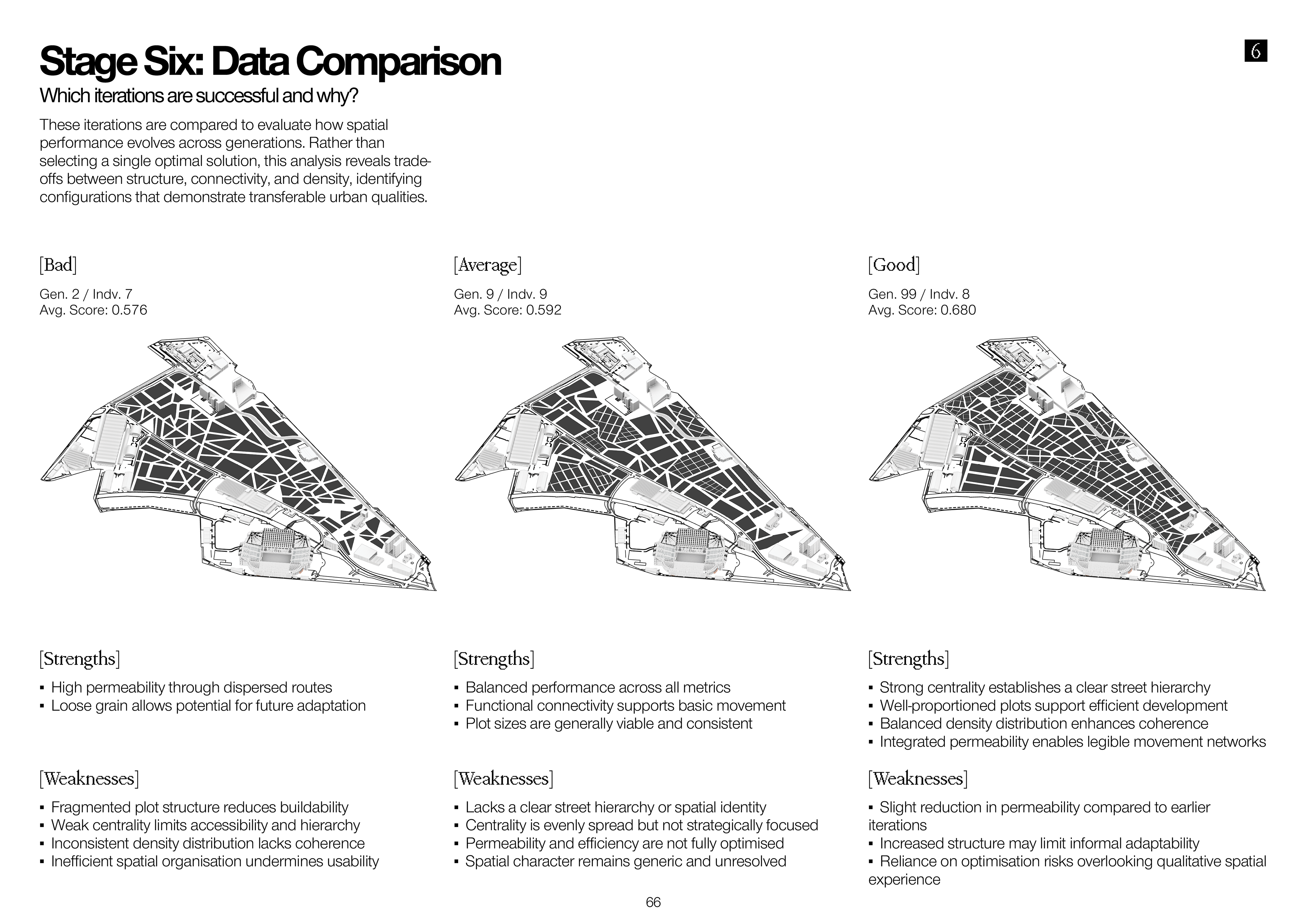
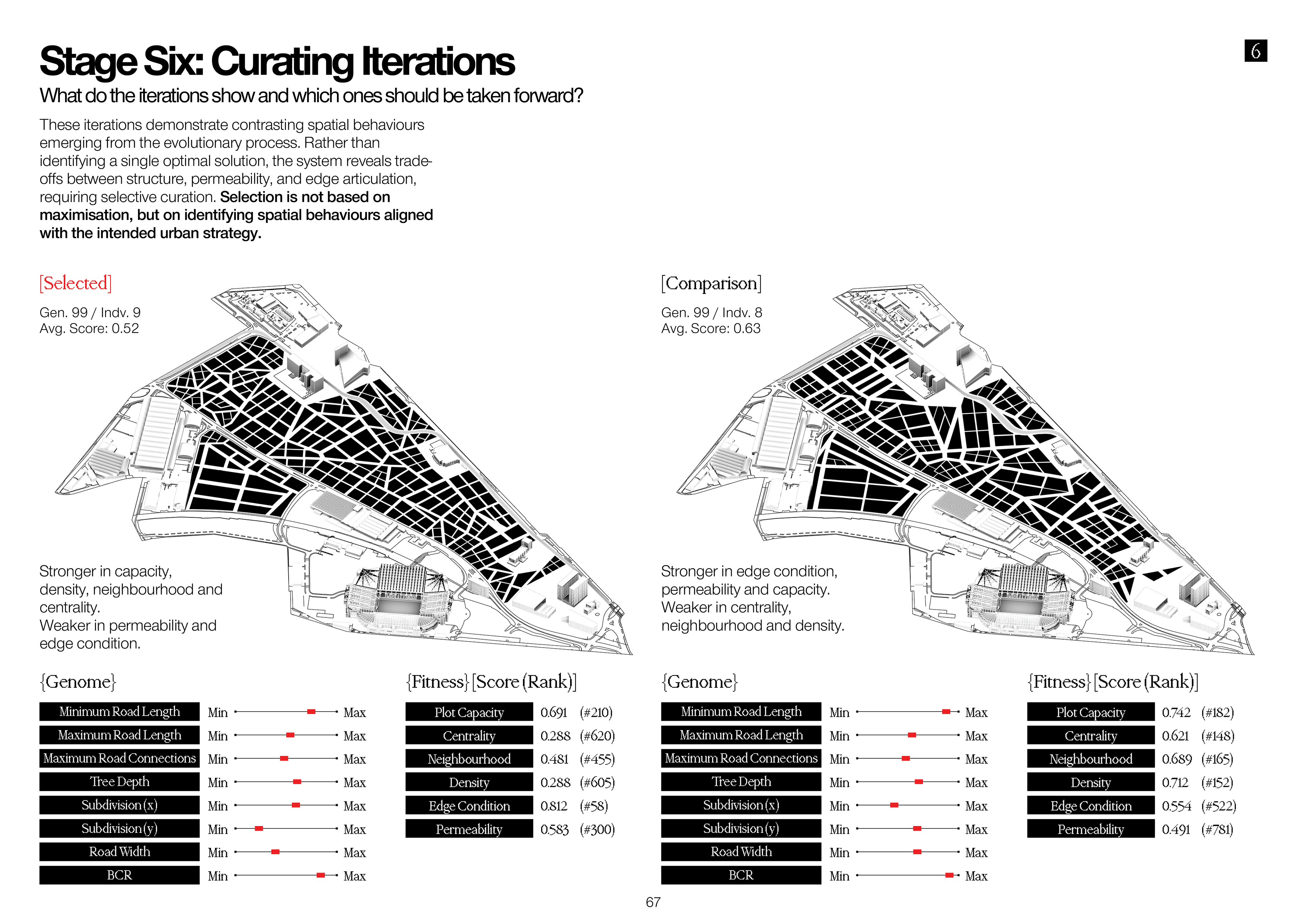
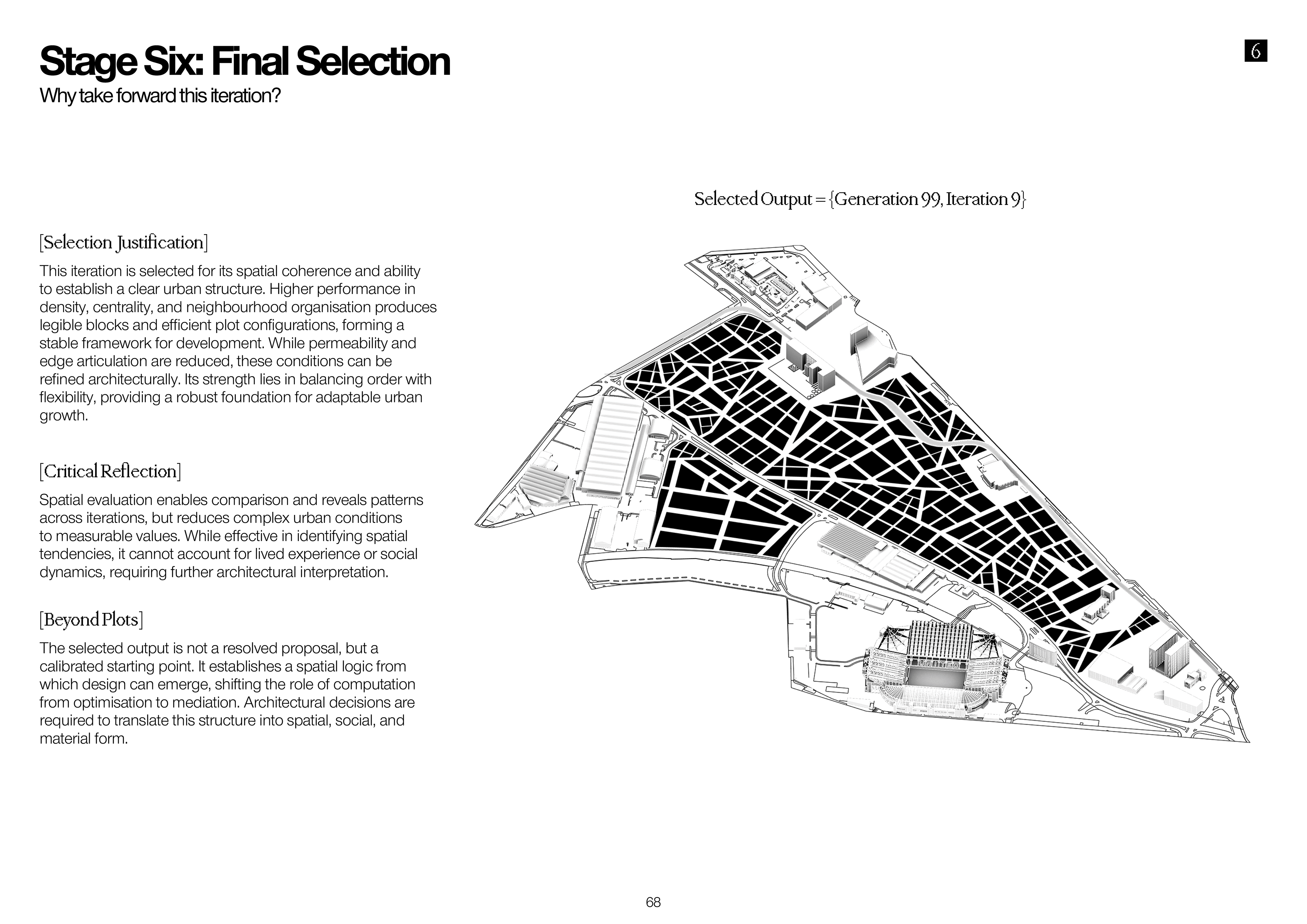
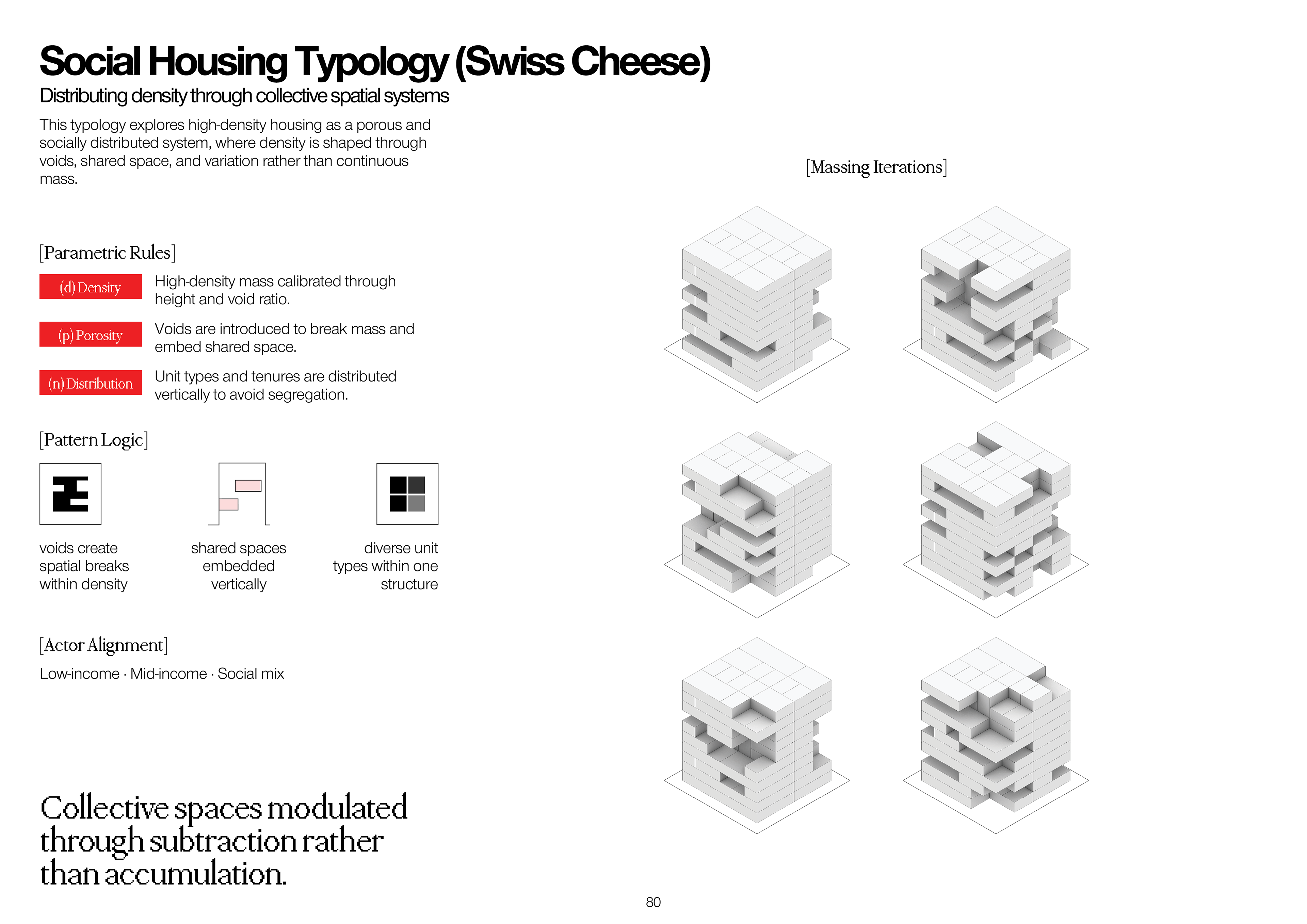
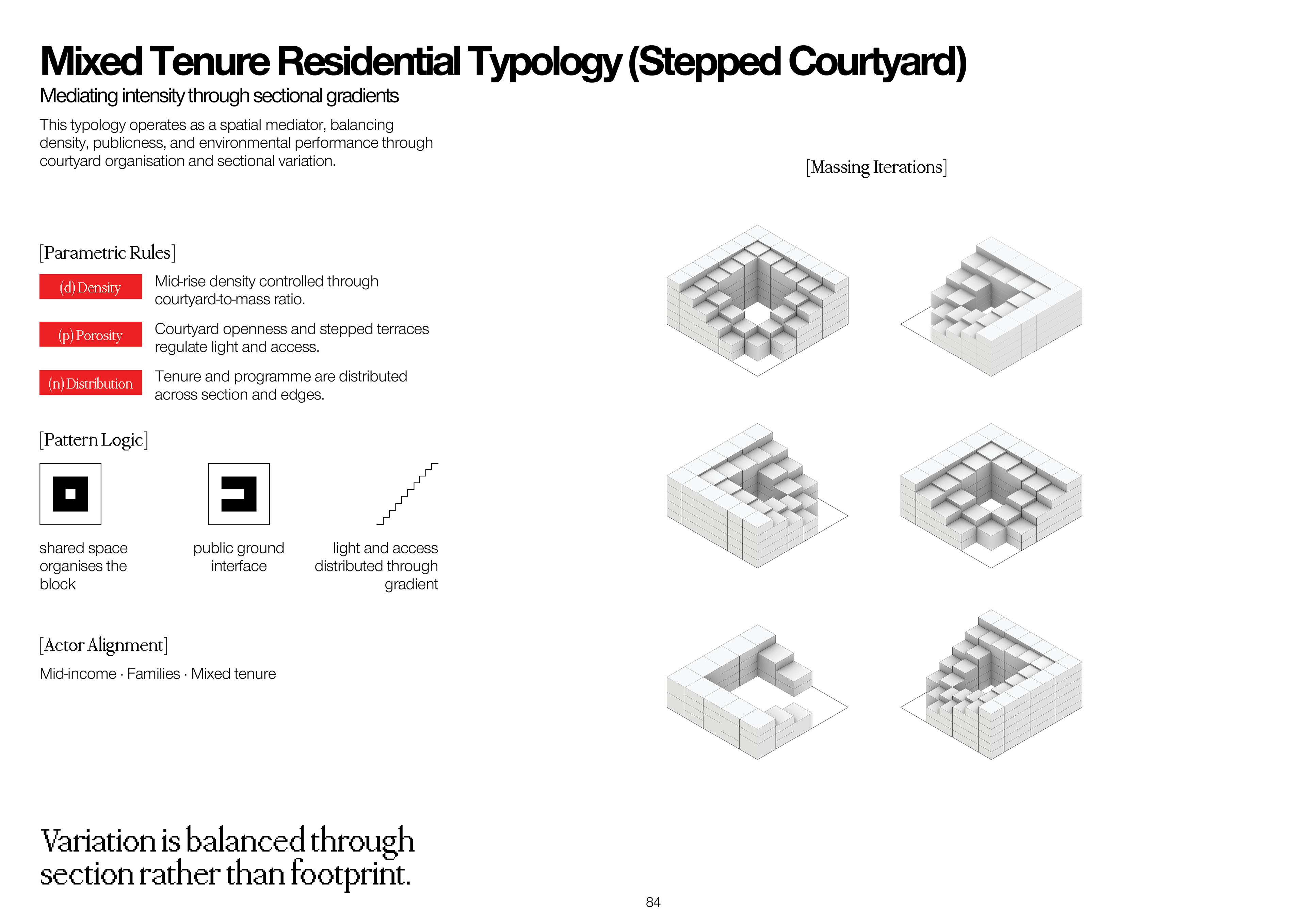
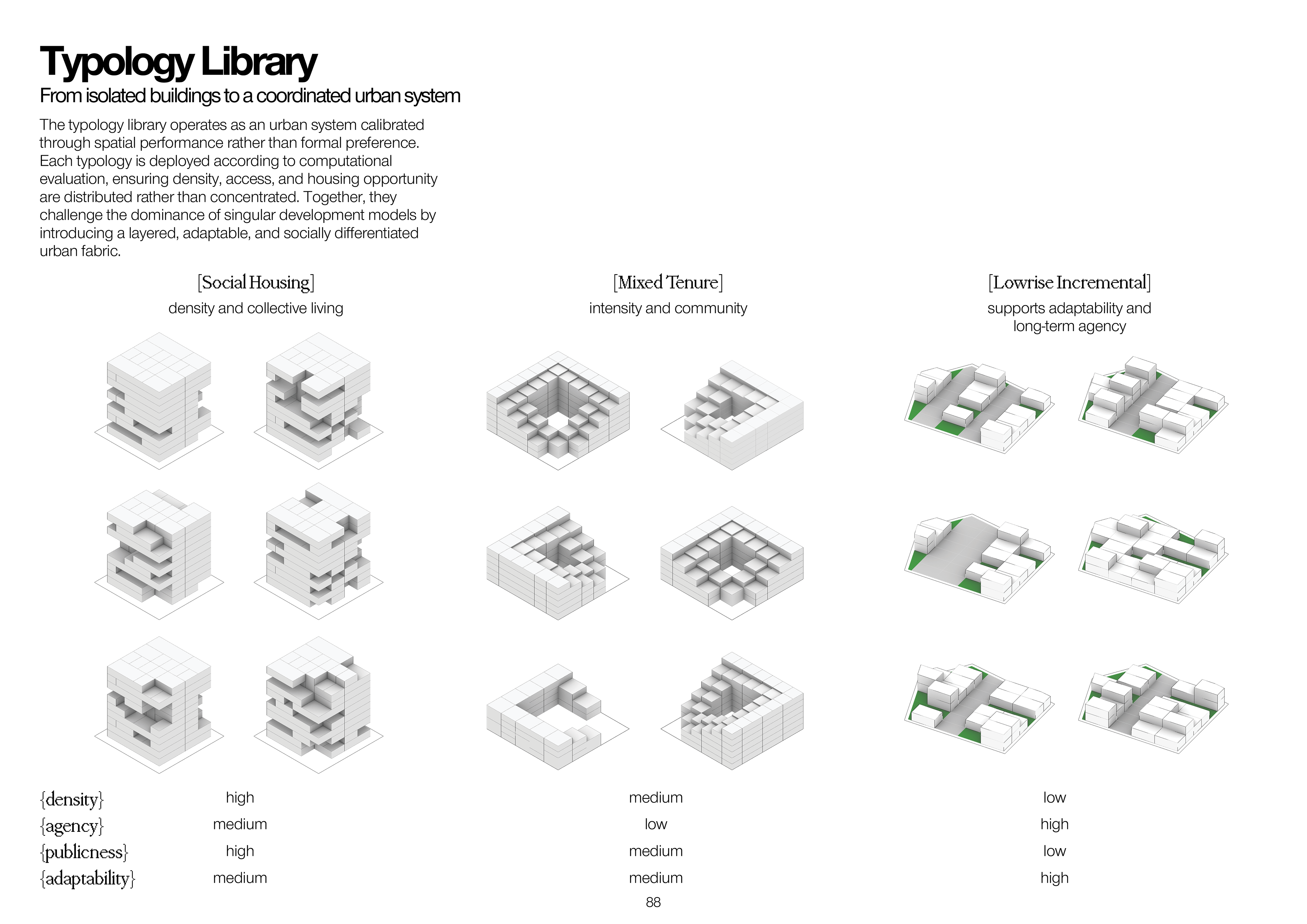
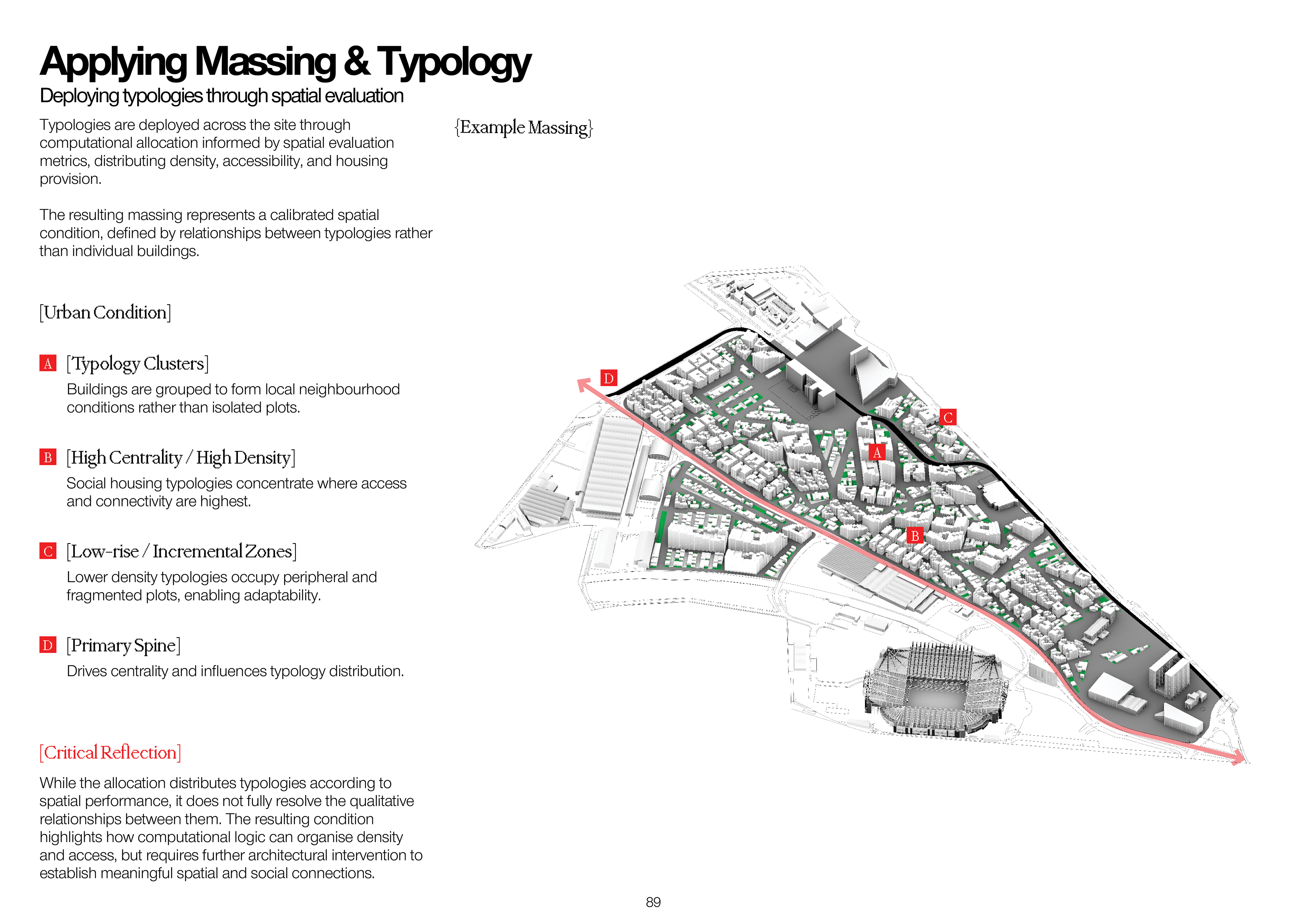
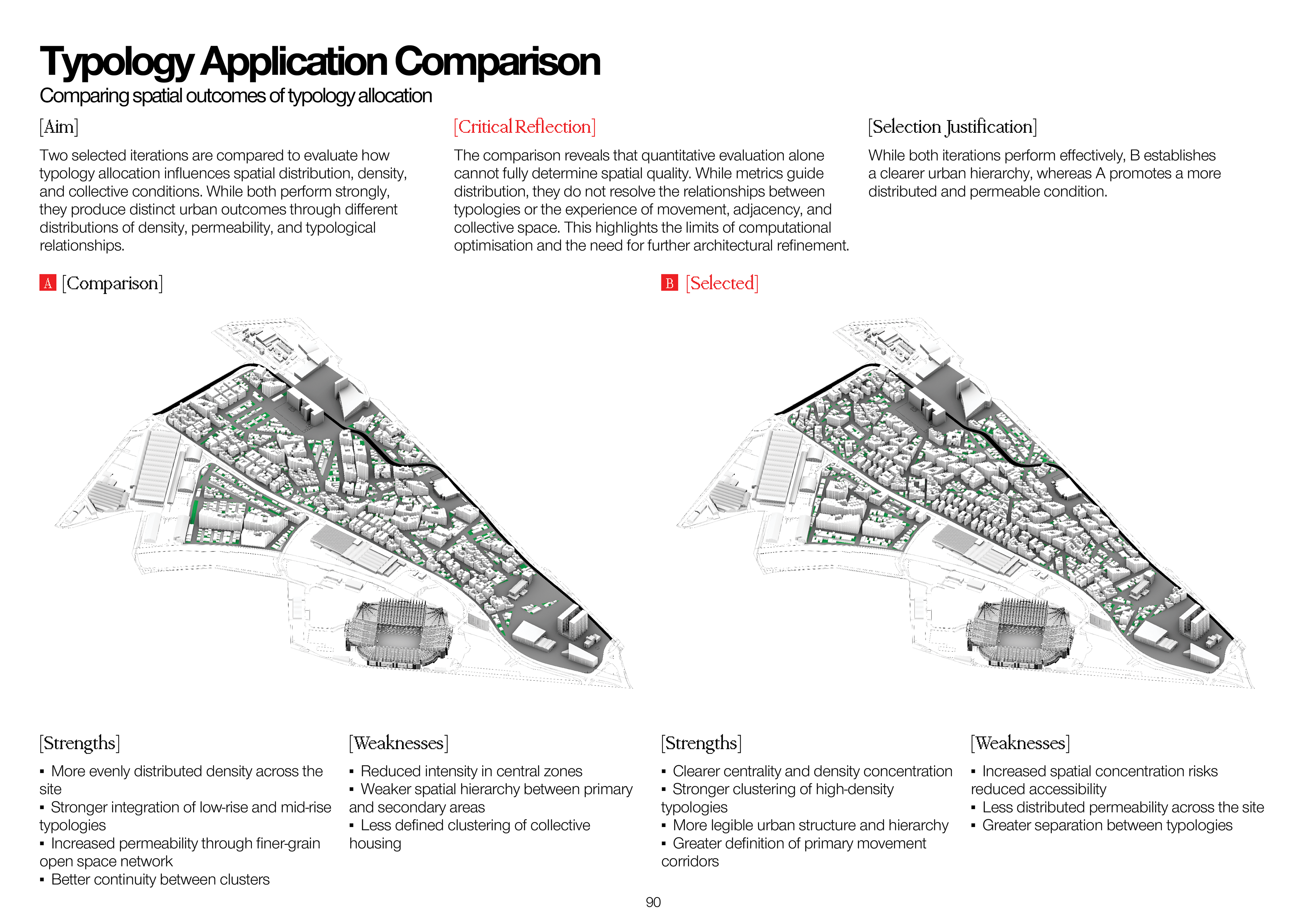
The design rationale centres on using computation as an evaluative tool, not simply a form-generating one. Through Grasshopper, Python, and evolutionary testing, the project generates street networks, subdivides plots, allocates typologies, and scores outcomes against centrality, capacity, neighbourhood balance, permeability, edge condition, and density. The selected outcome is not framed as an “optimal” solution, but as a resilient spatial strategy that redistributes development capacity, improves public access, and challenges the clustering of value-driven urban growth.
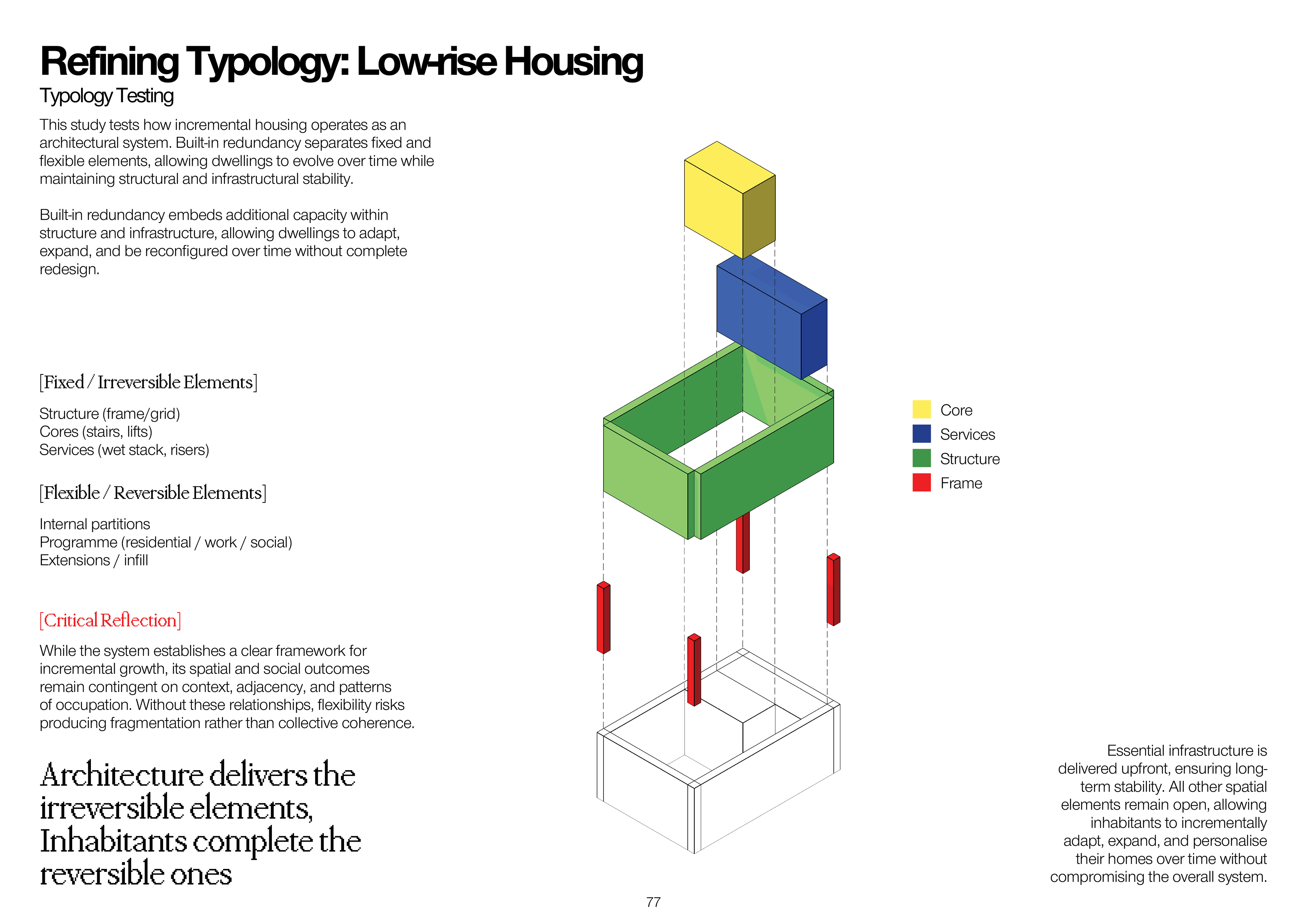
Rather than resolving the city as a finished design, PROMETHEUS establishes a rule-based urban framework whose spatial potential is tested and refined through architectural intervention in POIESIS.
See full portfolio below:Rather than resolving the city as a finished design, PROMETHEUS establishes a rule-based urban framework whose spatial potential is tested and refined through architectural intervention in POIESIS.